
Everything Changes
Life thoughts in picture books: notes on impermanence

Everything changes, eventually.
It’s a pesky life lesson that constantly likes to appear because, well, everything does change. In the picture book, Things That Go Away written and illustrated by Beatrice Alemagna, the constant nature of change is captured with words and pictures, but the real power is the actual transformation before the reader’s eyes. A sheer paper layer between the scenes allows the reader to make the change occur. Touching on a range of life’s mundane experiences…a wound, sleep, tears, weather, even a lice outbreak, Alemagna reminds the reader that these will go away eventually.


The one exception to all of these things that go away: a parent’s love.


“Eventually, everything passes, moves on, or changes.
But one thing never goes away, and never will.
Never.”
If you can find this at your library, I highly recommend a physical copy to experience the shifts (the turning of the pages) throughout the book.
Another way of saying it
What Alemagna is giving young readers is a concept that has long had a place in philosophy, religion, psychology, and a whole slew of self-help books. This is the grappling with the idea of impermanence. Nothing lasts forever. In some cases, this is a good thing! Lice, not forever, thank goodness. Tears eventually do stop, phew. And young children often need these reminders. They don’t know that the sadness they are experiencing about the injustice of having their toy stolen by a sibling won’t actually last forever. And then there is the other side of it, the birthday party will end. A new school year will begin, ending the summer freedom. A family pet will not live forever. These are the bittersweet lessons that we adults still struggle with. And the struggle can lead to even more distress.
Spiritual teacher and peace activist Thich Nhat Hanh wrote in No Mud, No Lotus: The Art of Transforming Suffering*:
“Both suffering and happiness are of an organic nature, which means they are both transitory; they are always changing. The flower, when it wilts, becomes the compost. The compost can help grow a flower again. Happiness is also organic and impermanent by nature. It can become suffering and suffering can become happiness again.”
Part of our distress can come from the desire for things to stay the same. Which then means we also want things to be different than they are. This creates a distance between reality and the want or desire. In that distance lives the suffering, like a troll under a bridge.

Or perhaps if we are really going to use this analogy. The bridge from The Three Billy Goats Gruff* by Mac Barnett and illustrated by Jon Klassen is more fitting.


I would love to use the billy goats here to continue this as a very tidy metaphor of how not to get pulled down by the troll. But the goats foil the would-be feaster with their clever wit. And there are enough clever people out there who still find themselves very much stuck in suffering.
The circumstances or changes, like loss of a loved one, a relocation need, or the end of a job, certainly bring with them their own pain, challenges, and stress. But getting stuck under the bridge with that troll, doing troll things, is where the pain is magnified. It’s the picking at the wound, experiencing the pain over and over, without moving to the other side of the bridge.
Moving forward involves some acceptance and the ability to choose what you are going to focus on. No, not toxic positivity, it’s not about ignoring the truth or putting a shiny, happy spin on it. Thich Nhat Hanh shares in No Mud, No Lotus how to manage the “mud” of life:
"When I lived in Vietnam during the war, it was difficult to see our way though the dark and heavy mud. It seemed like the destruction would just go on and on forever. Every day people would ask me if I thought the war would end soon. It was very difficult to answer, because there was no end in sight. But I knew if I said, “I don’t know,” that would only water seeds of despair. So when people asked me that question, I replied, “Everything is impermanent, even war. It will end some day.” Knowing that we could continue to work for peace.”
But wait, what about the love?
Alemagna’s picture book started us on this exploration of impermanence and suffering, but remember, she ends with love. The Moon Keeper* written and illustrated by Zosienka is another tale about inevitability of change but also the importance of love and belief. The story begins when Emile, a night animal, is given the coveted role of the “Moon Keeper.”


He takes his new role very seriously by caring for the moon in many ways. During his tenure, he starts to become concerned as he sees the moon changing. He consults others, like his neighbor and cousin, to see if they are seeing the same changes. Much to his chagrin, they are.
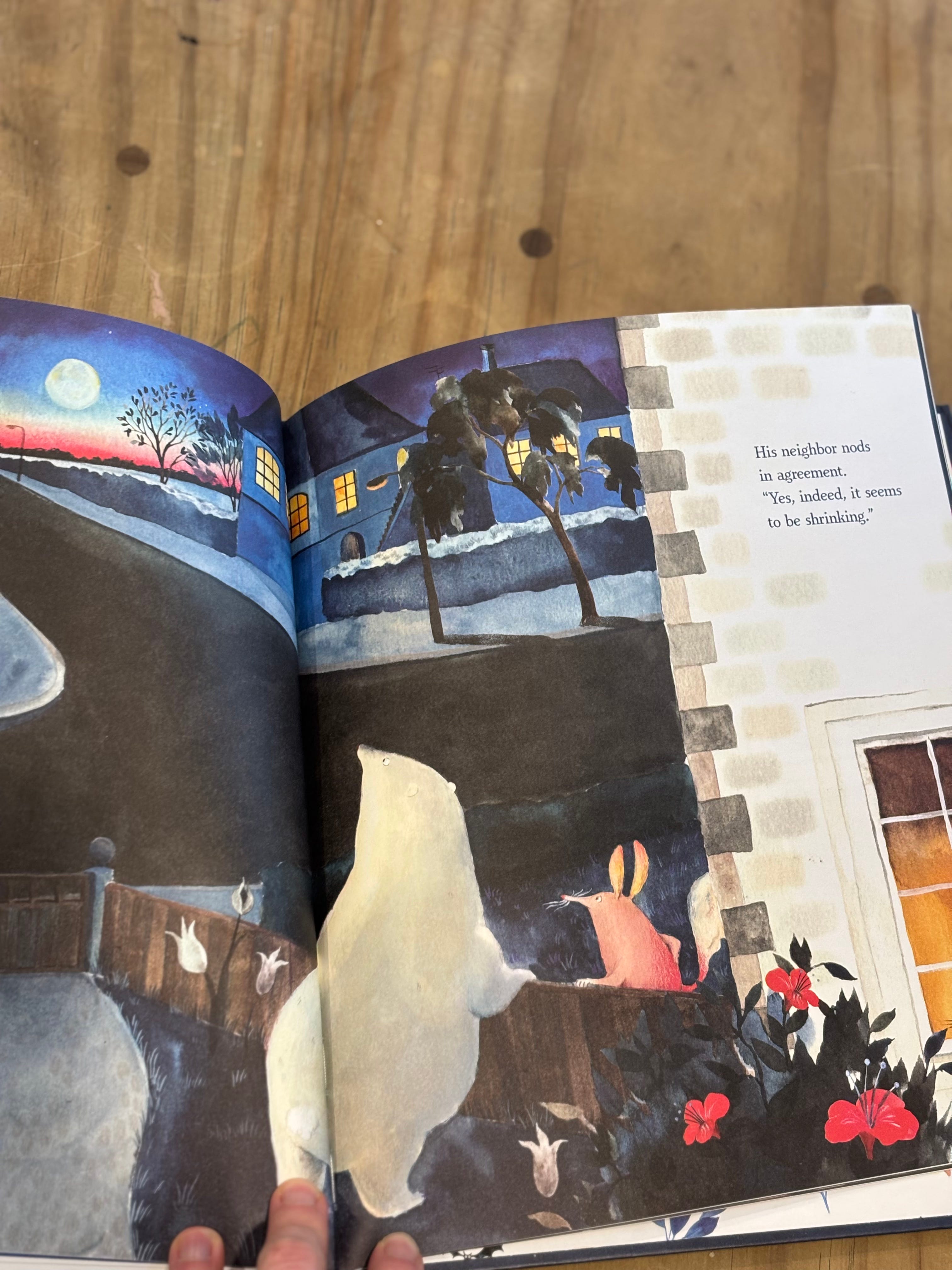
Emile does his best to protect the moon, but his efforts do not seem to have any impact on the disappearing moon. Eventually, a bird shares some wisdom with Emile, similar to Alemagna’s in Things that go away.
“ Things come and go—you’ll see,” says the bird.
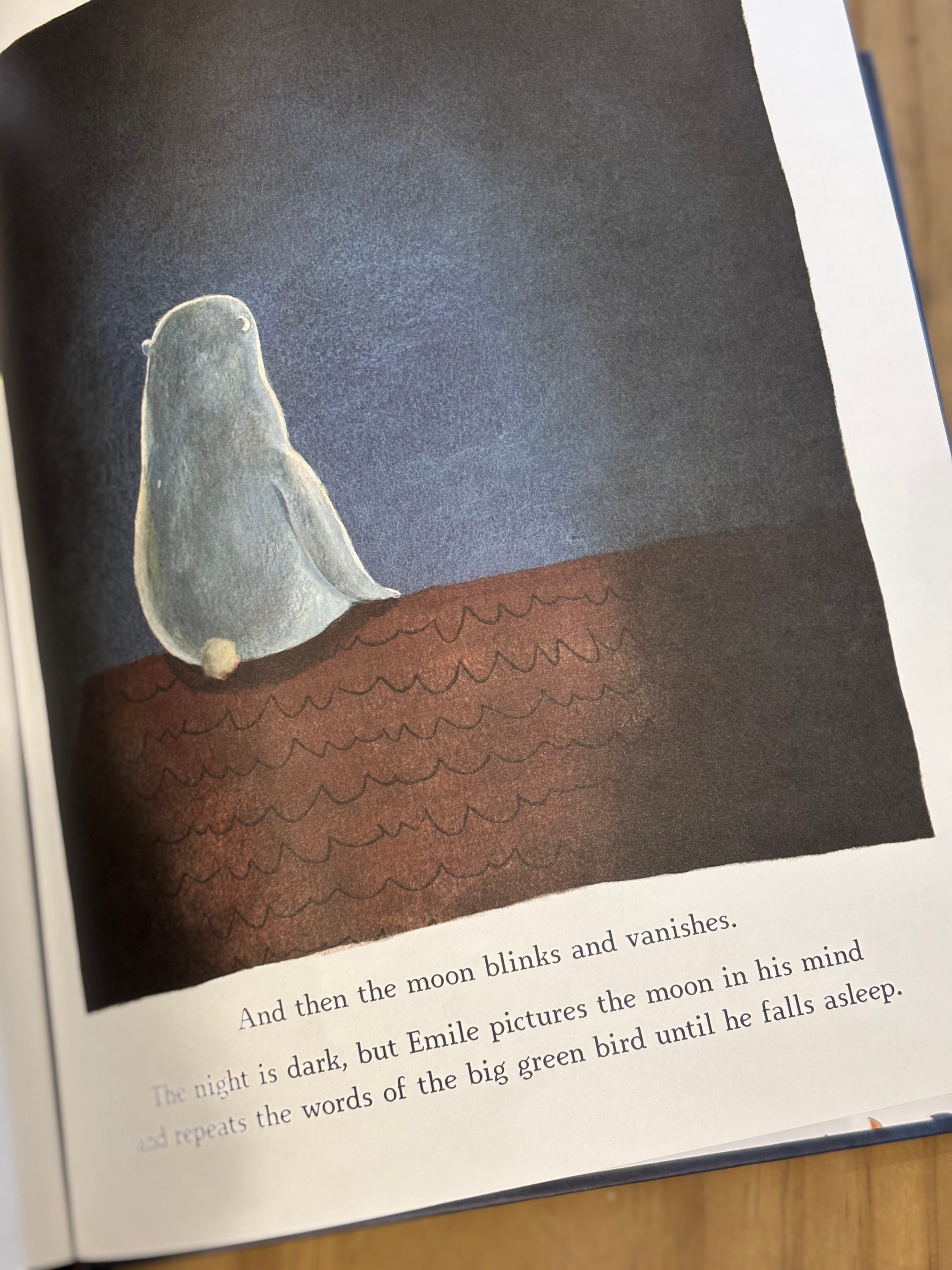
And then the moon blinks and vanishes. The night is dark, but Emile pictures the moon in his mind and repeats the words of the big green bird until he falls asleep.
What happens next?
Well, the moon slowly reappears each night fuller and fuller, much to the relief of Emile.
We are reminded that even in absence the moon is still there. Even in perceived absence, love is still there. So yes, some things do go away, but some things stay even when we can’t see them.
I believe Thich Nhat Hanh would tell you to add water wisely.
Dear readers, may you find something to water this week.
Back to avoiding the trolls of life,
Kathryn
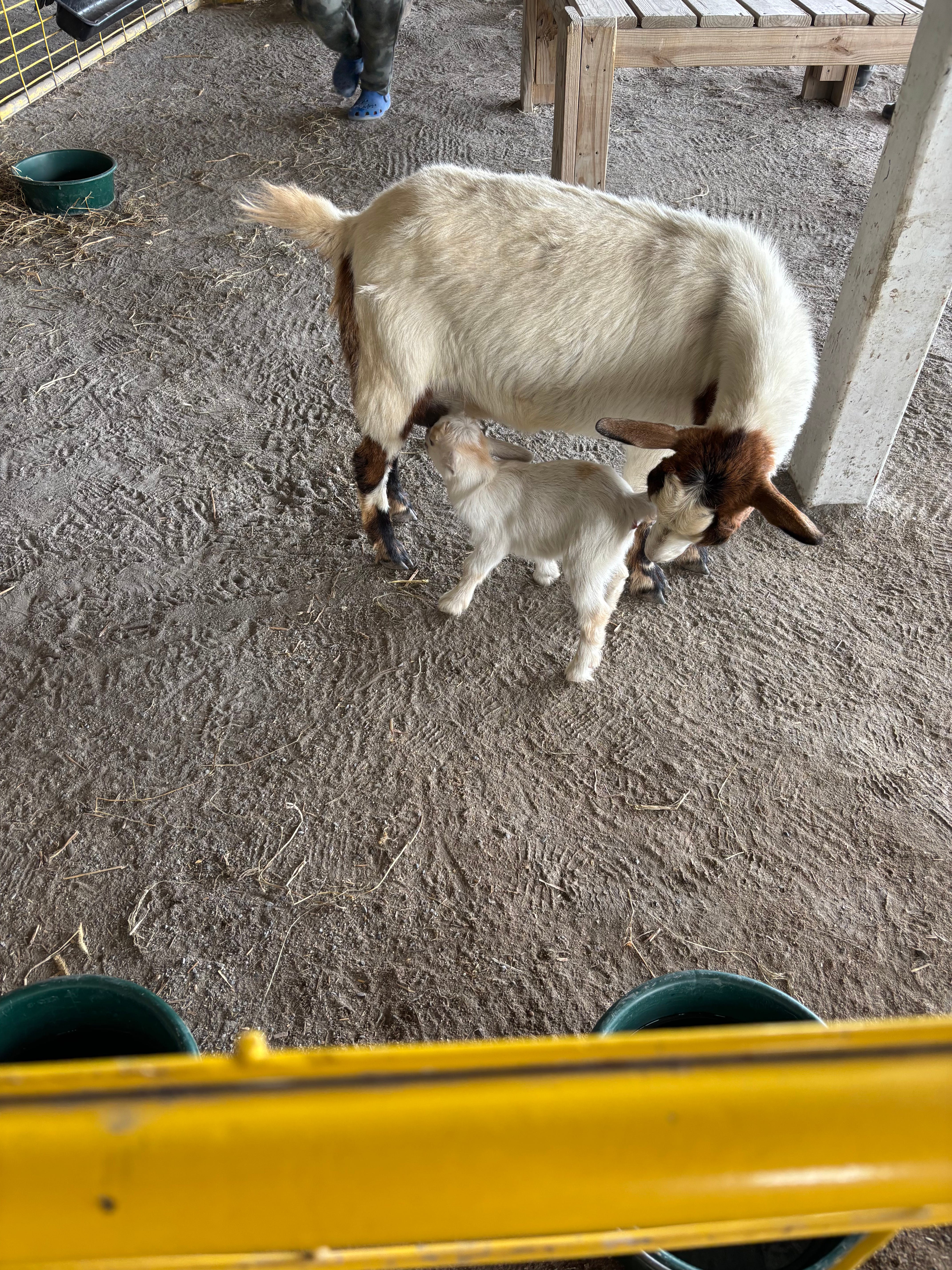
P.S. I have a dedicated fan of goats in my home. He would tell you that goats help alleviate suffering. Especially baby goats.
Kathryn, this piece took my breath away. Absolutely exquisite.
Love this, Kathryn. You love books as much as I do, maybe more. I wish my grandkids would allow me to read to them more. I compete with iPads. 😢